
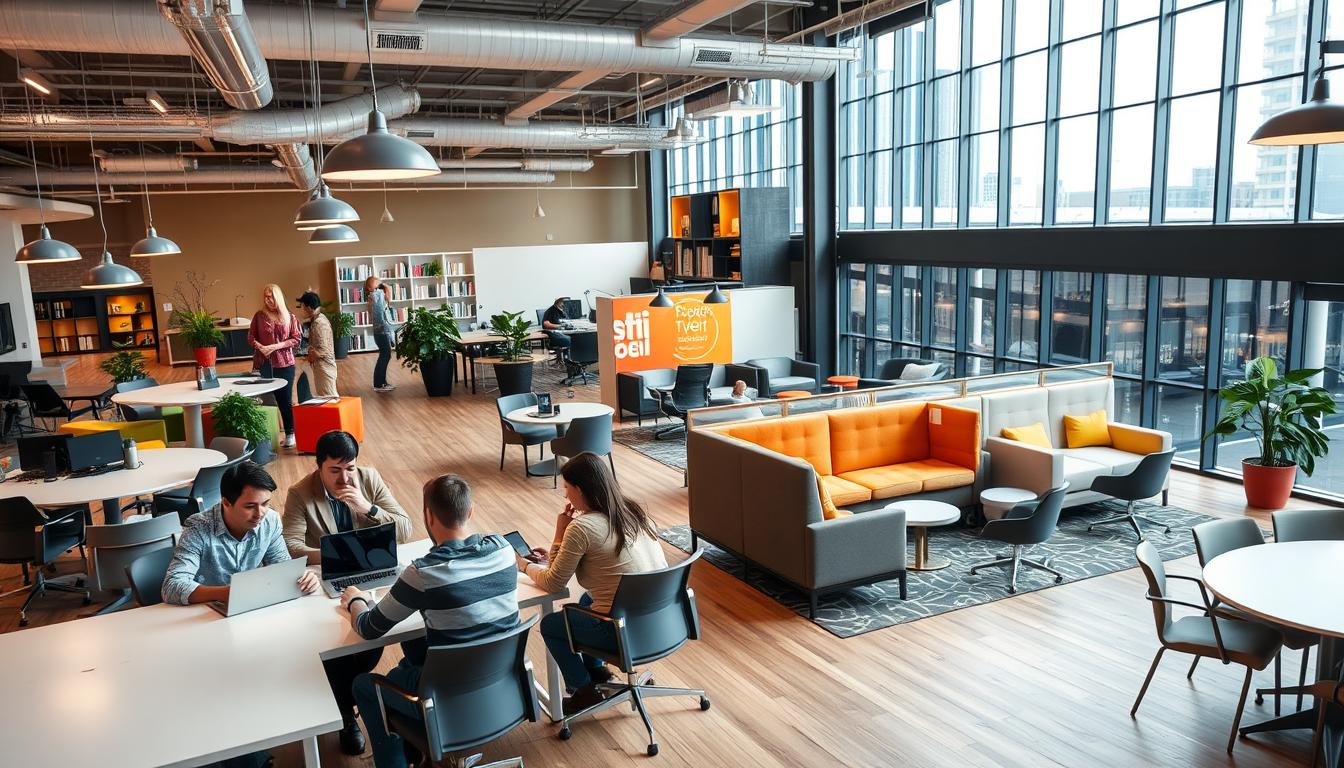
The modern workplace is changing a lot. Now, 92% of Millennials say they want flexibility when looking for jobs. This makes the old office setup seem old-fashioned.
Flexible workspaces are changing how we list properties. As people’s needs change, the real estate world is adjusting. It’s now focusing on creating work spaces that are more flexible.
Key Takeaways
- Flexible workspaces are becoming the new norm in the industry.
- The shift is driven by changing employee expectations.
- Property listings are being impacted by the rise of flexible workspaces.
- The traditional office setup is becoming less relevant.
- Millennials are driving the demand for flexibility in the workplace.
The Evolution of Workplace Dynamics
The digital age has changed how we work, focusing on flexibility and balance. This shift is transforming the traditional office space.
Statistical Shifts in Office Occupancy
Recent data shows a big change in office use. More companies are moving to flexible work setups. This has led to a drop in demand for traditional offices.
In some big cities, office use has fallen by up to 20%. This shows a big change in how businesses work.
Studies show workers want more flexibility and control at work. Most employees prefer flexible work, saying it improves their balance and productivity. This change is making companies rethink their office spaces.
These changes affect more than just offices. They also impact the housing market and buying trends. As workspaces evolve, understanding these shifts is key for businesses and investors.
Defining Modern Flexible Workspaces
Flexible workspaces are becoming more popular for businesses and professionals. They offer a versatile environment that meets different needs. This makes them a great choice for many.
These spaces come in various setups, from shared coworking areas to private offices. This flexibility is perfect for startups and growing companies. It lets them adjust their space as they grow.
In the US, you can find flexible workspaces to fit your business needs. Coworking spaces are great for working with others. They help with collaboration and networking.
Private offices in these spaces offer a more traditional feel. They provide privacy and security. Some spaces also have meeting rooms and event areas. These are perfect for meetings, team activities, or corporate events.
The appeal of these spaces comes from their ability to adapt to changing business needs. The real estate market is also changing, with more focus on flexible workspaces. This shift is affecting how people invest in properties and sell houses.
Key Drivers Behind the Real Estate Shift
The modern workforce is changing, leading to a new demand for flexible workspaces. This shift is challenging the old office space model. Now, people want workspaces that are adaptable and cost-effective.
Cost Analysis of Traditional vs. Flexible Spaces
The cost of traditional versus flexible workspaces is a big reason for the change. Traditional offices have long leases and high costs. On the other hand, flexible spaces are cheaper and can grow with your business.
Real estate agents say the flexibility and lower costs of flexible spaces are big pluses. They also help businesses stay agile in a fast-changing market.
Generational differences also play a big role. Younger people, like Millennials and Gen Z, want workspaces that are flexible and collaborative. They value a good work-life balance, driving the demand for shared office spaces.
Older generations might prefer traditional offices. But, as the workforce changes, younger people’s preferences are becoming more important. This is leading to a wider range of workspace options, meeting different needs.
The real estate industry is adapting by offering more flexible and innovative workspaces. This change is affecting the market for homes and commercial properties. People and businesses are looking for spaces that fit their evolving needs.
Benefits for Businesses Adopting Flexible Workspaces
Flexible workspaces can change the game for businesses. They boost employee happiness and teamwork. These spaces help businesses stand out in the real estate world.
Flexible workspaces help improve how well employees work. They offer different places to work, fitting each person’s style. This ensures everyone works at their best.
Productivity Metrics in Flexible Environments
Flexible workspaces can really boost productivity. Some businesses see a 20% jump in work output.
Flexible workspaces are designed to help teams work together better. They have open areas, meeting rooms, and shared spaces. These encourage sharing ideas and creativity.
These spaces can also be changed to fit business needs. This makes them more efficient to use.
In the housing market, flexible workspaces can breathe new life into old buildings. They turn them into lively centers of activity. This benefits businesses and the community, improving property listings.
Flexible workspaces offer many advantages. They improve work quality, employee happiness, and the real estate market. As the work world changes, these spaces will become even more vital.
The Current State of Real Estate in Flexible Work
The real estate world is changing fast. More people want flexible workspaces. Developers are now making spaces that are both flexible and collaborative, in cities and suburbs.
Urban areas are getting more flexible workspaces. Old office buildings are being turned into spaces for startups and freelancers. This shows a big change in how we work.
In suburbs, new buildings are being made for flexible work. They have cool features like fitness centers and community areas. This draws businesses looking for different work places.
The real estate industry is changing to meet new needs. It’s investing in flexible and adaptable properties. These include spaces designed for remote work and collaboration, thanks to new technology.
As the market for flexible workspaces grows, we’ll see more new ideas. This will happen in both cities and suburbs, thanks to real estate news and trends.
Investing in these properties is becoming more popular. “Investment properties” in the flexible workspace sector are attracting more investors. They see it as a good chance in the real estate market.
Major Players Transforming the Real Estate Landscape
Major players in real estate are moving towards flexible workspaces. This change is because they need to be adaptable in today’s fast-paced world. They’re not just buying or selling houses anymore. They’re investing in spaces that can grow with their needs.
The real estate world is changing fast, with flexible workspaces playing a big role. Big names are not only using these spaces but also changing how we think about buying or selling properties.

Old-school real estate firms are turning to flexible workspaces to stay in the game. For example, traditional companies are adding co-working spaces to their offerings. This move helps them stay flexible and opens up new ways to make money.
By adopting flexible workspaces, these companies can create better work environments for everyone. This move shows a bigger trend in real estate. Success now depends on being able to adapt and be flexible.
Challenges and Considerations for Stakeholders
The real estate world is changing fast. Stakeholders face many hurdles when they adopt flexible workspaces. One big worry is making sure they follow all the rules.
Compliance Requirements for Flexible Spaces
Flexible workspaces need to meet many rules. These include zoning laws, health and safety standards, and making sure everyone can get in. Real estate agents and managers must keep up with these rules to avoid trouble.
Changing property listings for flexible workspaces is hard. It’s not just about fixing the place up. You also have to update legal papers and lease agreements to show how the space is used now.
In the real estate field, people must deal with these problems while seeing the good sides of flexible workspaces. They need to know the rules for flexible spaces and how they affect listings and management.
By tackling these issues, real estate pros can help their clients more. They can also take advantage of the growing need for flexible workspaces.
Case Studies: Successful Implementations in American Markets
Flexible workspaces have been a hit in several American markets. They adapt well to different industries, making them successful.
Silicon Valley leads in adopting flexible workspaces, thanks to its tech giants. Google and Facebook have shown how flexible work boosts productivity and happiness. The area’s real estate market now offers more flexible, team-friendly spaces.
This change isn’t just for tech. It’s also making waves in other fields. It shows how flexible workspaces can revitalize the housing market and real estate overall.
Financial and Healthcare Sector Adaptations
The financial and healthcare sectors have also made big changes. In finance, companies use flexible spaces to cut costs and improve work-life balance. For example, some firms choose shared spaces in cities, saving on big office expenses.
In healthcare, flexible spaces help teams work better together. Hospitals and research centers create open areas for staff collaboration. This leads to better patient care and more efficient operations.
These changes across American markets show the power of flexible workspaces in real estate. They impact homes for sale and the housing market in big ways.
Future Trends in Flexible Real Estate Workspaces
Flexible real estate workspaces are on the verge of a big change. This change comes from new uses of AI and IoT. It’s key to know what’s happening in this field.
AI and IoT in Workspace Management
AI and IoT are changing how we manage workspaces. AI helps save energy, predict when things need fixing, and keeps places safe. IoT makes buildings smart and work better together.
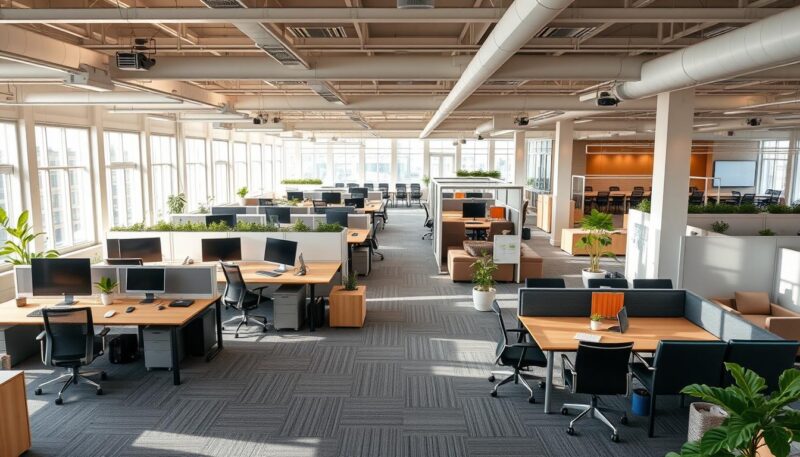
These new techs make work better and easier. For example, AI chatbots help with things like booking rooms or reporting problems.
The Rise of Suburban Flex Spaces
More people want to work in suburbs now. With more remote jobs, suburbs are getting more flex spaces. These spaces offer a community feel and are closer to home.
This move is about better work-life balance and less travel. So, suburbs are becoming a hot spot for real estate. News shows they’re a good place to invest.
In short, the future of workspaces will be tech-driven and suburban. Keeping up with these changes is important for businesses and investors.
Preparing Your Business for the New Workplace Reality
The real estate world is changing fast. Businesses need to adapt by using flexible workspaces. This change helps teams work better together and be more productive thanks to technology.
Companies should team up with a good real estate agent. They know how to make the most of flexible workspaces. Whether you’re selling or buying, the right advice is key.
Using tech and flexible spaces makes work better. It makes employees happier and helps businesses succeed in a fast-changing market.
Keeping up with the future of work means being proactive about real estate and workspaces. Flexible models and expert real estate help businesses face new challenges and chances.