Singapore’s economy remains resilient, with projected growth of 2.0% to 4.0% in 2026. Many investors ask whether this climate supports a smart industrial property choice for their portfolios.
Success in this sector requires more than broad market optimism. You must evaluate location, lease quality, and tenant demand to ensure your capital works hard.
A strategic industrial property investment depends on asset specifications and purchase price. Although the market remains tight, careful analysis can help manage risks and find value in the coming year. Investors who prioritize high-quality assets often see better long-term returns while testing their capital allocation against current market realities.
Understanding the Current Landscape of Industrial Property in Singapore
Singapore’s commercial real estate market is changing quickly as 2026 begins. Modern logistics needs make high-quality facilities vital for businesses with complex supply chains. This shift also shows the sector’s wider recovery, supported by efficient distribution networks.
Advanced manufacturing and e-commerce fulfillment drive growth in industrial space. Companies favor sites with easy links to global shipping hubs and local transport networks. Despite uncertain global trade policies, occupiers still seek specialized facilities that support stable operations.
A well-positioned warehouse for rent remains attractive to businesses that want to expand. Leasing is more selective, but tenants will pay more for smart technology and sustainable design. These features help modern, high-spec units keep strong occupancy during wider market changes.
Government planning controls and limited land shape the future of this asset class. Authorities keep investing in infrastructure to support long-term economic goals and industrial productivity. These rules support feasible development while balancing investor needs with the national economy.
Historical Performance of Industrial Property in Singapore
Singapore’s industrial sector has stayed stable through many economic cycles over the past two decades. When evaluating an industrial property, investors should look beyond headline transaction values. They should review rental growth, capital appreciation, and occupancy rates.
These measures show how industrial buildings perform against other asset classes. Retail and office spaces often change with consumer spending or corporate hiring trends. Industrial assets often remain resilient, making them popular with institutional portfolios and income-focused investors.
Compared with residential property or listed REITs, these assets often have a different risk-return profile. Industrial buildings usually offer steady yields through long-term leases and essential business operations. Still, historical data helps identify market behavior; it cannot predict the future.
Past performance does not remove risks from changing interest rates or global supply chains. Tenant quality and economic downturns can affect any industrial property investment. Although industrial property has an impressive history, prudent investors must weigh it against future market volatility.
Economic Factors Influencing Industrial Property Investment
Singapore’s industrial property market remains closely tied to global economic performance and local manufacturing trends. As the nation faces a complex international landscape, investors must watch macroeconomic factors that shape asset value. Strong manufacturing drives demand and directly affects warehouse use and factory occupancy rates.
Current projections point to steady sector growth between 2.0% and 4.0%. This outlook reflects strong business confidence despite wider global economic challenges. However, rising capital costs and changing international trade policies continue to affect local operations.
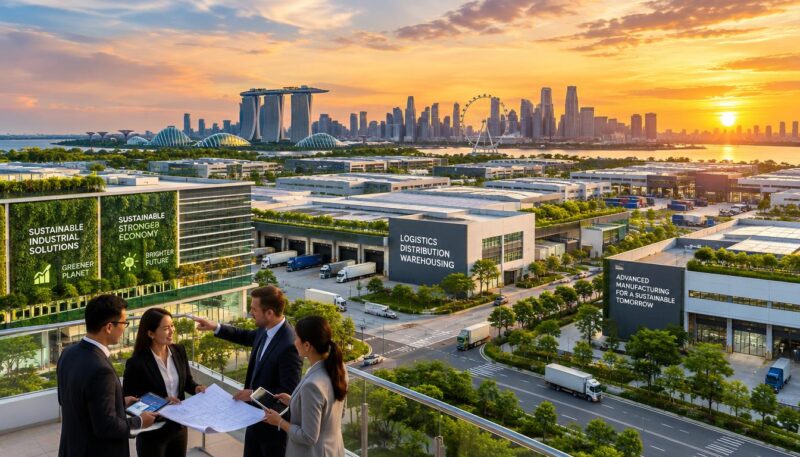
Global trade dynamics are undergoing major change. Supply-chain rerouting, onshoring, and nearshoring are changing how companies plan their logistics footprints. These shifts can increase demand for quality facilities in the industrial property market.
Firms seek to limit risks from tariffs and currency volatility. Inflation and changing financing costs also shape investment decisions. Higher interest rates can compress yields, making investors more selective with acquisitions.
When businesses face higher borrowing costs, they often improve efficiency, increasing demand for modern, tech-enabled industrial spaces.
Ultimately, the industrial property market depends on balanced domestic growth and external trade exposure. Investors who understand these economic forces can better navigate the complexities of the 2026 landscape. By aligning portfolios with sectors showing high export resilience, stakeholders can manage risk and capture long-term value.
The Role of Technology in Industrial Property
Modern technology is changing the needs of high-performance industrial buildings. Automation, robotics, and artificial intelligence have changed how businesses use physical space. These advances require smarter infrastructure for complex logistics and manufacturing.
Tenants now seek specific technical features when choosing their next industrial space. Key needs include higher ceiling clearances, greater floor loading capacities, and strong power supplies. Advanced cooling systems and high-speed connectivity are now essential for modern operations.
Industry 4.0 is driving major change in the real estate market. Well-located industrial buildings with smart systems often earn higher valuations and attract premium tenants. Older assets that cannot support these upgrades may become functionally obsolete.
Technological retrofits can greatly improve operating efficiency for occupants. Owners must weigh these benefits against high implementation costs. Technical obsolescence remains a risk because innovation continues to accelerate.
Flexible layouts and efficient loading access remain top priorities for developers. As demand for sophisticated industrial space grows, the gap between modern facilities and legacy properties will likely widen. Investors who prioritize these technologies are better positioned to secure long-term value in a competitive market.
Location Considerations for Industrial Properties
Strategic industrial assets can raise tenant demand and improve investment returns. In Singapore’s compact market, nearby infrastructure can shape an asset’s long-term success. Investors should choose sites with easy access to major expressways, international airports, and maritime ports.
A well-positioned industrial space attracts logistics firms and manufacturers that value speed. As distribution costs rise, occupiers prefer facilities that cut travel time. This choice helps protect asset value during economic volatility.
The surrounding ecosystem also affects property performance, beyond basic transport links. Businesses in a specialized industrial park gain shared resources and a collaborative setting. These established clusters often offer stronger utility capacity and specialized infrastructure than standalone sites.
Investors reviewing industrial land for sale must complete careful due diligence before investing. Verify zoning rules, permitted land uses, and the site’s remaining tenure. Check infrastructure capacity to ensure the property supports modern, high-tech manufacturing.
Review development timelines and future urban planning, since government land-use policies may change a prime industrial space’s value. Strong connectivity and a robust industrial park network can improve exit liquidity. When reviewing industrial land for sale, assess future growth to stay competitive in 2026 and beyond.
Understanding Lease Structures in Industrial Properties
Understanding industrial lease structures is vital for successful property investors. These agreements control income and set landlord and tenant responsibilities. The right structure can create a stable asset instead of one exposed to financial swings.
Investors often choose among fixed-term, gross, and net leases. When seeking a high-quality warehouse for rent, the lease type decides who pays operating costs, including taxes, insurance, and maintenance. A triple-net lease shifts most costs to the tenant, giving the owner more predictable net income.
Renewal options and rent escalation clauses are vital parts of a strong lease. They protect investors from inflation and help the property stay profitable. Clear terms for regular rent increases can preserve the asset’s value in a changing market.
Lease duration and break clauses also help manage risk. Longer terms usually provide greater income security, but investors must assess the tenant’s credit quality. A reliable tenant with a strong financial history may offer more value than a short-term occupant paying a higher rate.
Lease terms affect financing and shape the asset’s future saleability. When evaluating a potential warehouse for rent, review how maintenance duties and reinstatement provisions affect long-term capital spending. Aligning these legal structures with investment goals can build a strong, profitable industrial portfolio.
Risks Associated with Industrial Property Investment
Every successful portfolio strategy starts by assessing risks in industrial property investment. This asset class can offer steady returns, but global economic changes still affect it. Investors must watch cyclical demand and trade disruptions because both can reduce profits.
The industrial property market reacts quickly to changes in international supply chains. Trade tensions or global logistics bottlenecks can quickly change demand for warehouse and manufacturing space. This volatility can cause unpredictable vacancy rates and strain owners’ cash flow.
Operational challenges also shape the overall risk profile. Tenant concentration is a major concern because one large occupant can create serious risk if it fails or relocates. Functional obsolescence is another lasting threat: older facilities may not meet modern needs for automated logistics and high-tech manufacturing.
Construction costs and refinancing terms add complexity to industrial property investment. Rising material prices can quickly reduce profit margins during development or renovation. Changing interest rates may also complicate refinancing, especially for investors with shorter lease profiles.
Regulatory factors also affect the industrial property market’s stability. Investors must follow strict zoning laws, land-use controls, and changing environmental requirements. These rules can limit development, while policies on foreign or institutional capital may change competition across asset types and locations.
Opportunities in Emerging Industrial Sectors
The modern industrial park sector is changing to serve clean energy and advanced logistics. As global markets move toward sustainability, properties supporting renewable-energy equipment and electric-vehicle components face rising demand. These specialized facilities need strong infrastructure for complex manufacturing processes.
Clean technology and circular-economy activities are also driving sector growth. Tenants in these fields seek reliable utilities and strong transport connections. A well-designed industrial park gives companies the setting needed to meet operational and emissions targets.
Logistics and supply-chain innovation remain key pillars for future investment. Demand is growing for automated fulfillment centers and last-mile distribution hubs. Flexible storage and multi-user facilities help businesses expand efficiently in a competitive market.
Investors should assess potential tenants carefully before buying. They must review each site’s technology needs and power supply. High-capacity electrical grids often decide where advanced manufacturing companies locate.
Finally, assess how long demand may last in the chosen sector. An industrial park with sustainability credentials can attract high-quality tenants for years. Focusing on these emerging areas can help investors succeed in an evolving property landscape.
Financing Industrial Property Investments
Securing the right capital is vital for every successful industrial property investment. Investors can choose traditional bank loans, commercial mortgages, or private credit. Each option offers different benefits based on risk appetite and project timeline.
Larger or more complex projects may use mezzanine financing or equity partnerships as flexible alternatives to standard debt. Listed property vehicles offer sector exposure without direct asset management. Understanding these structures helps investors optimize their capital stack.
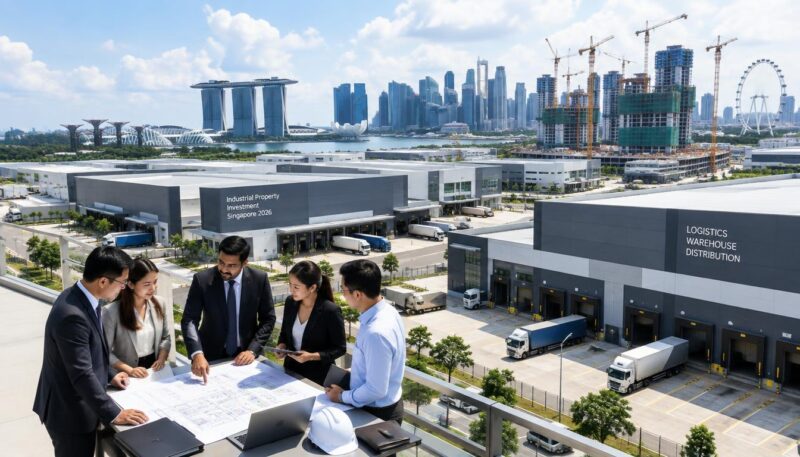
When reviewing deals, monitor loan-to-value ratios and debt-service coverage. These figures affect borrowing capacity and overall returns. Review interest-rate types, covenants, and amortization schedules, which shape monthly cash flow and refinancing risks.
Investors seeking industrial land for sale face special development-financing challenges. They must plan for construction risks and staged drawdowns during the building phase. Steady rental income may not begin for a significant time.
Falling borrowing costs can improve project feasibility, but favorable markets are never guaranteed. Stress-test returns against higher interest rates, slower leasing velocity, and construction delays. These scenarios can help protect equity during market downturns.
A disciplined financing plan keeps an industrial property investment resilient. Balance debt levels and maintain a buffer for lower exit valuations. Careful financial planning supports sustainable growth and a profitable portfolio in the current economic climate.
Integrating ESG Factors into Industrial Property Investments
Environmental, social, and governance (ESG) criteria are rapidly reshaping the industrial property market. Investors now see sustainability and ethical management as essential for long-term asset performance. These factors affect property values and the ability to attract high-quality tenants.
Environmental concerns form the backbone of modern ESG strategies. Owners increasingly invest in energy-efficient systems, rooftop solar panels, and advanced water management solutions. These upgrades cut carbon emissions and build climate resilience, helping protect assets from extreme weather events.
Building certifications, such as Green Mark or LEED, are now standard benchmarks in the industrial property market. These labels show that a facility meets high environmental standards. Social factors, including labor safety and site accessibility, also affect tenant satisfaction.
Governance also matters because investors must use careful tenant screening and transparent reporting. Strong governance controls keep properties compliant with changing regulations. These priorities help owners reduce risks and strengthen their reputation among institutional investors.
Owners must weigh the cost of retrofitting older buildings against possible rental premiums. Initial capital expenditure can be high, but long-term benefits often include lower operating costs and higher demand. Balancing these costs with financing incentives is key to success in the current industrial property market.
Expert Insights and Future Predictions for 2026
As 2026 approaches, market analysts remain positive about Singapore. The nation remains a safe haven for capital, with steady growth projections between 2.0% and 4.0%. This stability supports people interested in commercial real estate.
Investors should pair this optimism with careful risk management. High financing costs and changing trade patterns require careful asset selection. Successful industrial property investment depends on prioritizing high-quality, well-located facilities with long-term operational value.
Smart capital allocation requires checking lease income and managing leverage effectively. Assess each tenant’s needs so your holdings stay relevant in a changing market. Focus on flexibility to protect your portfolio from possible leasing slowdowns.
The industrial sector still offers viable ways to preserve and grow wealth. Stay informed and selective to navigate today’s complex market. Contact local market experts or financial advisors to discuss how these trends fit your specific portfolio goals.