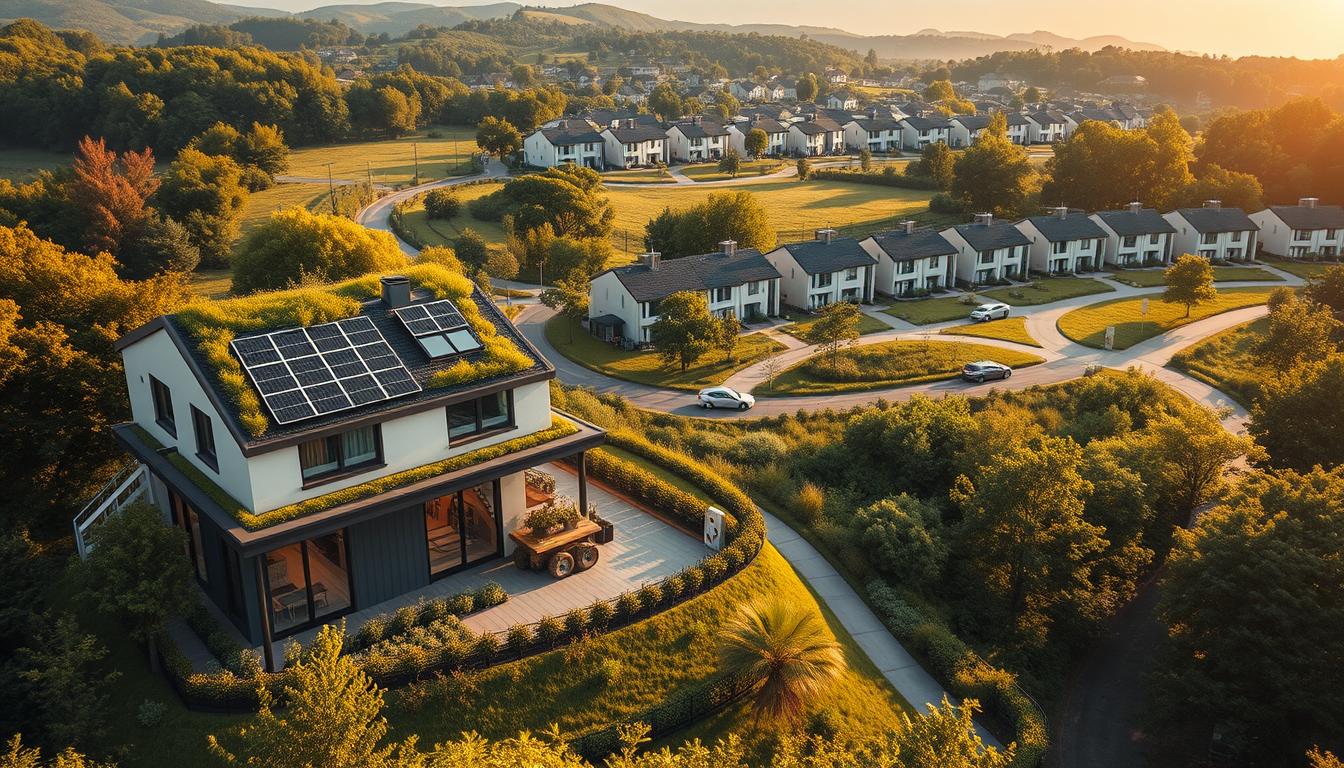
The real estate market is changing fast. Now, people want homes that are good for the planet and have the latest tech. They look for homes that are both eco-friendly and smart.
It’s key to market the green features of homes well. As more people want these homes, using smart marketing is vital. It helps sellers and developers to be noticed in a crowded market.
Key Takeaways
- Understanding the growing demand for sustainable and smart homes.
- Identifying effective marketing strategies for green features.
- Leveraging smart home technology to enhance property appeal.
- Highlighting eco-friendly aspects to attract environmentally conscious buyers.
- Utilizing innovative marketing tools to showcase sustainable homes.
The Green Real Estate Revolution of 2026
The year 2026 is a key moment in the green real estate movement. Younger people, like Generation Z and Alpha, are at the forefront. They want homes that are good for the planet.
Generation Z and Alpha Buying Preferences
These young folks are looking for homes that save energy and use eco-friendly materials. Their choices are changing the real estate world.
- Eco-friendly building materials
- Energy-efficient systems
- Sustainable living spaces
Real estate agents can attract these buyers by focusing on a property’s green aspects. They can highlight energy-saving gadgets, green building materials, and designs that care for the environment.
The Value Proposition of Sustainable Homes in 2026
Sustainable homes in 2026 are more than a trend. They are essential for those seeking a better quality of life. These homes bring many benefits, like better air quality and improved well-being.
Air Quality Monitoring Systems
One key feature of sustainable homes is air quality monitoring systems. These systems keep indoor air clean and healthy. This helps the well-being of everyone living there.
- Real-time air quality monitoring
- Alerts for poor air quality
- Integration with ventilation systems
Biophilic Design Elements
Biophilic design is also vital in sustainable homes. It includes natural light, green walls, and organic materials. These elements connect the indoors with the outdoors, making living spaces better.
- Increased natural light
- Use of organic and sustainable materials
- Incorporation of green spaces
The value of sustainable homes in 2026 is clear. They provide a healthier, more sustainable place to live. Features like air quality monitoring and biophilic design are big draws. They appeal to those who value well-being and sustainability.
Essential Real Estate Tools for Marketing Green Properties
The real estate market is changing fast. Marketing green properties is now key to attract buyers who care about the planet. Real estate pros are using new tools and tech to highlight the benefits of sustainable homes.
Real-time energy monitoring displays are a big help in marketing green homes. They let homeowners see how much energy they use. This helps them use less energy and cut down on their environmental impact.
Real-Time Energy Monitoring Displays
These displays make it easy to show how green a home is. Homeowners can watch their energy use live. They can find ways to use even less energy and save money on bills.
- Provide detailed energy consumption data
- Enable homeowners to optimize energy usage
- Offer a unique selling point for green properties
Using real-time energy monitoring displays can make green homes more appealing. It shows the energy savings and benefits of sustainable living. This can draw in buyers who want to live green and set your listings apart.
Immersive Virtual Tours for Sustainable Features

Virtual tours with thermal imaging overlays are revolutionizing the way we look at green properties. This cutting-edge tech lets potential buyers dive into sustainable homes in a fun and educational way.
Immersive virtual tours give a close-up look at a property’s green features. This includes insulation, windows, and HVAC systems. With thermal imaging overlays, buyers can see how these elements help save energy.
Thermal Imaging Overlays
Thermal imaging overlays give a special view of a property’s heat performance. This tech shows where heat escapes or enters, proving the home’s insulation and energy-saving tech works well.
- Enhanced visualization of energy-efficient features
- Improved buyer understanding of sustainable technologies
- Increased engagement through interactive virtual tours
Real estate pros can now showcase green homes better with immersive virtual tours and thermal imaging. This attracts buyers who care about eco-friendly homes and saving energy.
Data-Driven Marketing Strategies for Green Homes
Data-driven marketing is changing how green homes are sold. It gives buyers solid proof of a home’s greenness. Real estate agents use data to show how green homes save money and help the planet. This makes them more appealing to those who care about the environment.
Carbon footprint tracking is a big part of this marketing.
Carbon Footprint Tracking Tools
These tools help homeowners and buyers see a home’s environmental impact. They track energy use, water, and more. This gives a full picture of a home’s carbon footprint.
- Quantifiable data on energy efficiency
- Insights into water conservation efforts
- A clearer understanding of a property’s overall sustainability
Using data-driven marketing, like carbon footprint tracking, helps real estate agents highlight green homes’ value. This attracts buyers who want to live sustainably.
Social Media and Digital Marketing for Eco-Properties

Real estate agents are now using social media and digital marketing to show off eco-friendly homes. This change comes from more people wanting to live sustainably. They’re looking for homes that are good for the planet.
Social media, like platforms for short videos, is key for marketing green homes. It lets agents share a home’s green features in a fun and easy way.
Short-Form Video Showcases
Short videos grab people’s attention quickly. They’re great for showing off things like energy-saving gadgets and solar panels. These are important for homes that care about the environment.
- Create engaging content that showcases the eco-friendly aspects of a property.
- Utilize platforms like TikTok, Instagram Reels, and YouTube Shorts to reach a wider audience.
- Optimize your videos with relevant keywords and hashtags to improve visibility.
By using short videos, real estate agents can draw in buyers who care about the planet. This helps them sell eco-properties more effectively.
Storytelling Techniques for Sustainable Property Listings
Storytelling is changing how we market green homes. It makes these homes more appealing to buyers. Real estate agents use stories to connect buyers with a home’s eco-friendly aspects.
Agents can tell personalized energy saving scenarios. For example, they might show how solar panels save money on bills. This makes the home’s green features real and personal to buyers.
Personalized Energy Saving Scenarios
- Highlight specific energy-efficient appliances and their benefits.
- Use data to demonstrate potential savings on utility bills.
- Create a narrative around the property’s sustainable features and how they contribute to a greener lifestyle.
Using stories in marketing makes green homes more attractive. It shows off the home’s features and connects with buyers on a personal level.
Smart Home Technology Demonstrations

Smart home technology is changing the real estate world. It shows buyers what the future of homes might look like. With voice-activated tours and AI guides, buying a home is now more fun and interactive.
Voice-Activated Home Tours, AI Assistant Property Guides
Voice-activated home tours lead the way in smart home tech. Buyers can explore homes from afar, using voice commands. This makes the buying process better and highlights a property’s unique features.
AI property guides are also key. They use AI to give personalized tours, answering questions and sharing property details. This makes the experience more engaging and informative for buyers.
Smart home tech demos offer many benefits. They improve the buyer experience, make things more efficient, and give properties an edge. Homes with smart tech attract buyers who love technology.
Real estate pros can attract more people by using smart home tech demos. As the industry grows, smart home tech will be vital in marketing homes.
Advanced Visual Marketing for Green Properties
Visual marketing is now key in promoting eco-friendly homes. It offers a lively way to show off their green features. Advanced visual marketing is being used more to make green properties stand out to buyers.
Time-Lapse Features of Passive Solar Design
Time-lapse features are a top tool for green property marketing. They show how natural light interacts with the property’s design over time. This highlights energy efficiency and cuts down on artificial lighting needs.
Real estate agents use time-lapse photography to show buyers how the property’s design works. This visual helps buyers see the property’s eco-friendly aspects. It also shows the potential for saving energy.
Using advanced visual marketing, like time-lapse, makes green properties more attractive to eco-aware buyers. As more people seek sustainable homes, these marketing tools will play a bigger role.
Building Trust Through Third-Party Verifications
Third-party verifications are key in building trust for eco-friendly property buyers. In today’s market, where sustainability matters, these certifications are crucial. They make a property more credible.
These verifications, like energy efficiency certifications, prove a property’s green features. They give buyers confidence in the property’s sustainability claims. This is vital since greenwashing is a growing concern.
Virtual community tours add to the trust-building process. They let buyers see the property and its eco-friendly surroundings. This immersive view helps buyers understand the community’s green efforts.
By using both third-party verifications and virtual tours, sellers can show their properties in a clear, trustworthy way. This builds a stronger bond with potential buyers.
Preparing Your Real Estate Business for the Green Future
The real estate market is changing, and businesses need to keep up. They must focus on sustainable and green properties. It’s important to invest in new technologies and marketing strategies to succeed.
To get ready for the green future, real estate companies should create effective marketing plans. They should highlight eco-friendly features like energy-saving appliances and green building materials. This will attract buyers who care about the environment.
Investing in smart home technology and advanced marketing can also help. Showing off green properties in a compelling way can build trust. Getting third-party verifications and certifications can make a business more credible and loyal customers more likely.
By embracing the green future, real estate businesses can lead the way. As the market becomes more eco-friendly, companies that adapt and innovate will do well. They will be ready for the growing demand for sustainable properties.